Thinking about refreshing your yard before listing or just want to enjoy more of Napa’s sunshine at home? In St. Helena, the right outdoor upgrades can help you live better now and create stronger buyer appeal later. You can balance wine‑country style with water‑wise planting, smart lighting, and spaces that work across seasons. This guide outlines the features buyers consistently respond to in St. Helena and how to plan, permit, and phase them for maximum payoff. Let’s dive in.
Why outdoor living sells in St. Helena
St. Helena’s Mediterranean climate means warm, dry summers and cool, wet winters. Buyers look for shade, airflow, and spaces that extend evening hours with comfort. The wine‑country lifestyle also favors outdoor dining, small‑footprint recreation, and landscapes that complement vineyard views. A well‑composed yard feels like an extra room, which can tip a decision when homes compete.
Covered dining that works year‑round
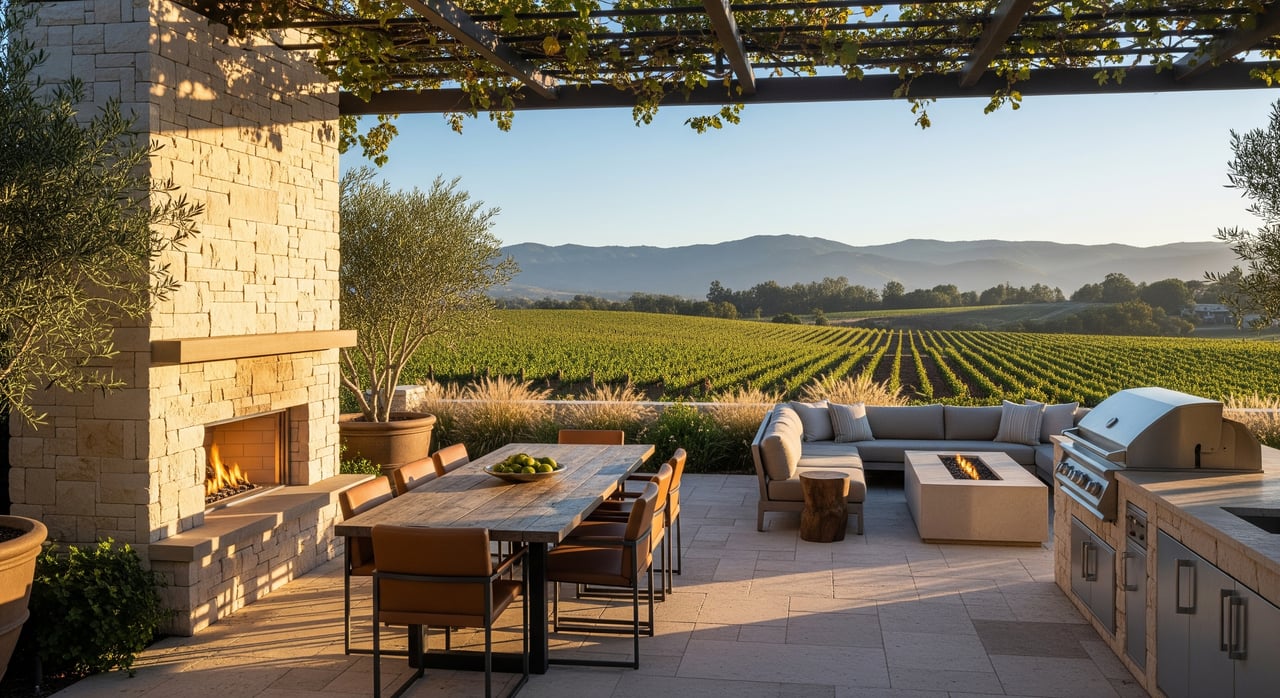
A covered dining area is one of the highest‑impact upgrades in St. Helena. Shade in summer and shelter in spring and fall increase usable days and help indoor spaces feel larger. Options range from a freestanding pergola to an attached roofed patio or a louvered system that adjusts with weather. Choose materials that handle seasonal moisture and UV, and plan for low‑glare lighting to extend evenings.
Best design moves
- Prioritize a table zone, a grill or prep station, and clear circulation.
- Consider a louvered or retractable roof to adapt to sun and light rain.
- Select durable materials like steel or aluminum for frames, and UV‑stable fabrics for awnings.
- Add ceiling fans, heaters, and dimmable task lighting for comfort and control.
Permit check and timing
Attached or roofed structures often require permits, and enclosed rooms can trigger energy and setback rules. Start early with the City of St. Helena to confirm requirements and review timelines. Smaller pergolas may move faster, while structural additions take longer for plan check and inspections. Book contractors in advance for spring and summer schedules.
Drought‑smart landscapes buyers appreciate
Water‑wise planting reads as both responsible and refined in Napa Valley. Native and Mediterranean species offer seasonal color with lower irrigation needs and maintenance. Organize plants by water use, convert spray zones to drip, and layer mulch to reduce evaporation. The result is a landscape that feels at home next to vineyards and is simpler to own.
Water‑wise strategies
- Replace turf with native grasses, groundcovers, sages, lavender, rosemary, and manzanita.
- Use drip irrigation with pressure regulators, flow sensors, and a smart controller.
- Group by hydrozones so higher‑need plants do not overwater lower‑need beds.
- Keep non‑combustible hardscape or low‑fuel plants close to structures for defensible space.
You can often offset part of the cost of irrigation upgrades by checking rebate programs through your local water provider or following EPA WaterSense guidance on smart controllers.
Maintenance that stays simple
Plan seasonal pruning and controller adjustments twice a year. Refresh mulch annually to suppress weeds and conserve moisture. Keep pathways and planting near structures tidy to support wildfire preparedness. Document plant lists and irrigation upgrades for buyers who value transparency.
Bocce and social recreation
Bocce fits St. Helena’s social rhythm and needs less space than larger courts. A 10 to 13‑foot wide by 60 to 80‑foot long court is common for residential properties. Surfaces include crushed oyster shell, decomposed granite, stabilized aggregate, or specialized turf. Good base preparation and drainage prevent settling and reduce maintenance.
- Add low, shielded path lights for evening play and safety.
- Place the court where it can anchor a gathering space near a patio or pergola.
- Keep adjacent plant irrigation tuned to avoid runoff and surface swelling.
Most small, unroofed courts do not require a building permit, but verify setbacks and grading rules. Professional builds cost more upfront but often reduce long‑term maintenance.
Pools and spas done right
Pools and spas can be compelling in hot summers and the luxury segment, but buyers may ask about water use and operating costs. Focus on right‑sizing, efficient equipment, and a cover to reduce evaporation. Electric heat pumps and solar heating can lower energy use, and variable‑speed pumps cut operating costs. Keep vegetation and materials around the pool aligned with defensible‑space guidance for safety.
- Plan for required barriers, self‑latching gates, and any alarm rules.
- Site equipment to minimize noise near outdoor rooms and bedrooms.
- Estimate annual costs for energy, water, and maintenance so you can present them to buyers.
Permits and inspections are standard for pools, spas, and related electrical and plumbing work. Expect longer review and build timelines than for landscape refreshes or pergolas.
Lighting and controls for ambiance and safety
Thoughtful lighting extends evenings and sets the tone without glare. Layer task lighting at dining and prep areas, shielded path and step lights for safety, and warm accent lights on trees or stone. Use dimmers, timers, and motion sensors to control run time and preserve the night sky. In California, outdoor lighting often must meet energy efficiency and control standards, so plan fixtures and switching early.
- Favor warm color temperatures in the 2700K to 3000K range.
- Aim fixtures downward and shield light to reduce spill and skyglow.
- Consider low‑voltage LED systems for efficiency and simpler maintenance.
Plan, permit, and phase your upgrades
Large outdoor projects benefit from a phased plan. Phasing helps you enjoy quick wins while bigger items move through design and permits. It also spreads costs and keeps parts of your yard usable during work. Here is a simple roadmap tailored to St. Helena’s seasonality.
Phase 1: Quick, high‑impact
- LED lighting updates with timers and basic path lights.
- Smart irrigation controller and visible bed refresh with drought‑tolerant plants.
- Shade solutions like umbrellas or temporary pergola covers for immediate comfort.
Phase 2: Medium scope
- Built pergola or roofed dining area with fans and dimmable lighting.
- Patio or hardscape upgrade and a prepared base for a future bocce court.
- Rough‑in electrical and gas for an outdoor kitchen or heaters to future‑proof the zone.
Phase 3: Major or longer‑lead
- Pool or spa with efficient equipment and a well‑documented safety plan.
- Fully enclosed sunroom or screened room, if appropriate for your site and goals.
- Engineered bocce court with drainage and stabilized surface.
Budget, ROI, and presentation
Exact costs vary by contractor and finish level, so secure multiple bids. In general, covered dining areas, water‑wise landscaping, layered lighting, and a curated recreation feature deliver strong buyer appeal for the spend. Pools and enclosed additions can be decisive in certain segments, though some buyers prefer lower‑maintenance yards. The key is to match features to your property, neighborhood expectations, and likely buyer profile.
When listing, package your upgrades clearly. Provide permits and inspection sign‑offs, maintenance schedules, a plant palette, irrigation maps, and energy or water‑saving notes. Buyers respond well to documented efficiency, sustainability, and safety features. This transparency reduces perceived risk and supports your target price.
Local code, fire, and energy basics
- Defensible space matters in a fire‑prone region. Keep clearances around structures, choose low‑fuel plants near the home, and use non‑combustible hardscape close to buildings.
- Structural additions, pools, and accessory structures often require permits and inspections. Setbacks, height limits, and design review can influence scope and timing.
- Outdoor lighting typically must meet efficiency and control rules. Plan fixture specs, switching, and sensor locations with code in mind.
Starting early with planning and documentation will keep your schedule realistic and your budget predictable.
Ready to tailor a plan?
If you want a property‑specific roadmap, including which upgrades to do now, which to phase, and how to present the result to discerning Napa buyers, let’s talk. With design‑forward marketing and disciplined process, you can enjoy your outdoor spaces and position your home to stand out. Schedule a confidential consultation with Karteek Patel.
FAQs
What outdoor upgrades add the most buyer appeal in St. Helena?
- Covered dining, drought‑smart planting with smart irrigation, layered lighting, and a well‑executed bocce court tend to resonate widely across the local market.
Do covered patios or pergolas in St. Helena need permits?
- Attached or roofed structures commonly require permits, and enclosed rooms can trigger energy and setback rules, so confirm specifics with the City before you design.
How can I make a pool more acceptable to eco‑minded buyers in Napa Valley?
- Right‑size the pool, use a cover, choose a variable‑speed pump and efficient heating, and document annual water and energy use so buyers see the real operating profile.
What plants work for drought‑smart landscapes in St. Helena?
- Consider California natives and Mediterranean species such as sages, lavender, rosemary, manzanita, ceanothus, and native grasses organized by hydrozones and drip irrigation.
How long do permits typically take for outdoor projects in St. Helena?
- Small landscape updates can move in weeks, while structural additions and pools can take several months for plan check, permits, and inspections, especially in peak season.
How should I present outdoor upgrades to buyers when I list?
- Provide permits, maintenance schedules, irrigation maps, and notes on water and energy efficiencies so buyers understand long‑term care and value at a glance.