A sweeping valley vista can add real money to your sale. The challenge is proving what that view is worth in Calistoga’s thin, luxury-leaning market. If you are selling, you want to capture the premium without overreaching. If you are buying, you need confidence that the view justifies the price and the ongoing costs. In this guide, you will learn a clear, comp-based method to price a view home in Calistoga, plus the risk checks and marketing moves that protect your position. Let’s dive in.
What drives value in a Calistoga view
View quality and type
Not all views are equal. Document the field-of-view angle, elevation, and whether other properties could block it in the future. Panoramic or iconic vistas that are wide, unobstructed, and likely permanent tend to command the strongest premiums. Framed or partial views have value, but the premium is smaller. Scarcity in your immediate area matters. If very few homes nearby offer a similar panorama, buyers often pay more.
Lot orientation and solar
Orientation affects sunlight, comfort, and how you live outdoors. South or west exposures that capture sunset light are usually more desirable. Gentle slopes that allow usable terraces add marketability. Very steep sites can increase construction, drainage, and maintenance costs. That can mute the view premium.
Privacy and buffers
Privacy is both visual and acoustic. Greater distance to neighbors, topographic buffers, and mature landscaping reduce sightlines and noise. Public vantage points like roads or trails may lower perceived privacy. Buyers pay attention to this in Calistoga, where quiet, vineyard-adjacent living is part of the draw.
Architecture and indoor-outdoor flow
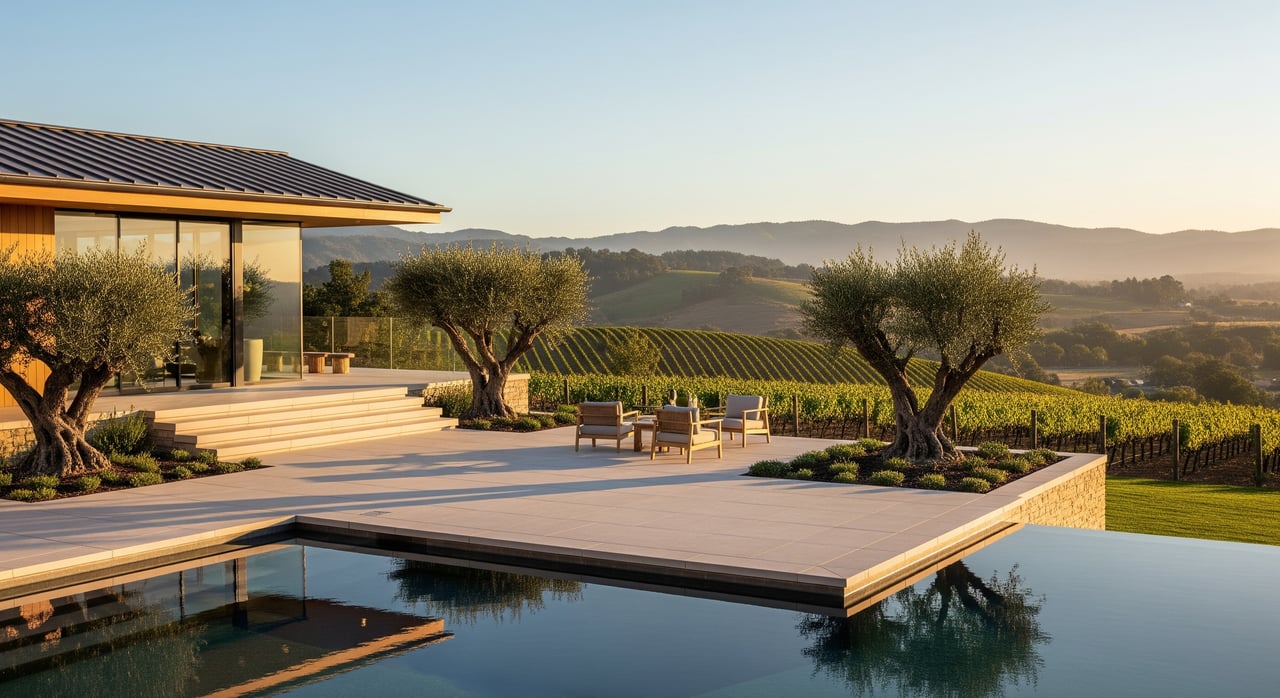
Architecture can amplify or dilute the view’s impact. Large glazed openings, well-placed rooms, and sightlines that frame the landscape elevate the premium. Strong indoor-outdoor connections and oriented terraces help a buyer feel the view in daily life. Condition matters too. High-caliber finishes and modern systems are often expected at the price points view homes reach. Deferred maintenance can trigger large negative adjustments.
Pool and outdoor amenities
Pools, outdoor kitchens, landscaped terraces, and guest spaces can improve marketability. Their contribution to price varies by buyer and by property. In many cases, appraisers treat pools on a contributory basis rather than full replacement cost. Placement is key. Amenities should support, not block, the view.
Acreage and usable land
More land can mean more privacy and estate feel. In Calistoga, extra acres that are usable and accessible are worth more than steep, non-developable terrain. Price per additional acre is highly local. Calibrate to recent nearby sales with similar topography.
Access and proximity
Distance to downtown Calistoga, wineries, and major roads shapes demand. A stellar view far from services may trade at a lower premium than a strong view near town. Road quality and driveway grades also matter. Difficult access can deter buyers and add costs.
Risk and regulatory factors
Wildfire exposure, insurance availability and cost, hillside development limits, and easements all influence value. Properties in higher fire severity zones often face higher carrying costs and more underwriting scrutiny. Zoning and potential nearby development affect view permanence. Natural hazard disclosures and permit records will influence buyer perceptions and the premium they assign.
A clear pricing framework
Step 1: Select credible comps
Start with recent sold properties in Calistoga within the last 6 to 12 months. In a small market, extend to 24 months if needed and stay cautious with outliers. Prioritize homes that match bed and bath counts, gross living area, lot type, and architectural quality. Give the most weight to comps where the primary difference is the view.
Step 2: Normalize for non-view differences
Before assessing the view, adjust for basics. Account for living area, bedroom and bathroom count, age and condition, garage or parking, and major amenities. Use the most recent local sales to inform your dollar or percentage adjustments. Keep your notes clear and consistent across comps.
Step 3: Classify view tiers
Use a simple, consistent taxonomy so you are comparing like with like:
- No view
- Framed or partial
- Clear or valley
- Panoramic or iconic
Rate both your subject home and each comp. Document why. Include field-of-view, elevation, and likely permanence.
Step 4: Quantify the view premium
Use paired-sales when possible. Find two similar sales where the main difference is view quality. The price gap helps you estimate the market’s view adjustment. In Calistoga’s thin dataset, validate against several examples and use a rolling window of sales.
Step 5: Adjust secondary drivers
Apply additional adjustments for privacy, orientation, pool, acreage, and architecture as supported by local data. Treat pools and discrete structures as dollar contributions. Treat tiers of view and overall condition as percentage adjustments. Note any interactions. A panoramic view plus standout architecture can be worth more than the sum of parts, although premiums often face diminishing returns.
Step 6: Reconcile a price range
Run the process across multiple comps. Discard outliers that require excessive adjustment. Reconcile to a realistic price range rather than a single number. In a market with limited inventory, a well-supported range and a clear narrative usually earn stronger buyer confidence.
View premium ranges to calibrate
The following ranges are illustrative starting points that must be calibrated to recent Calistoga sales through paired analysis:
- Framed or partial vs. no view: about +3% to +8% of price
- Clear or valley vs. no view: about +8% to +18%
- Panoramic or iconic vs. no view: about +15% to +30% or more when scarcity is high
- Privacy, when significant: about +5% to +15%
- Pool, market dependent: about +20,000 to +100,000 dollars, or roughly +2% to +6% for higher-priced homes
- Architecture and condition delta: subtract or add about 5% to 25% depending on severity
These are planning ranges only. In Calistoga, a single standout sale can skew averages. Anchor your final adjustments to the best, most recent local comps.
Simple example
- Base comp sale: similar size, bed and bath count, and location, but no view.
- Normalize: comp is 5% smaller. Add about 5% for size.
- View: subject is panoramic. Add about 18% as supported by paired sales.
- Privacy: subject has strong buffers. Add about 7% if local comps support it.
- Pool: subject has a pool, comp does not. Add a market-derived dollar amount, for example 40,000 dollars.
- Reconcile across several comps and derive your range.
Prove and protect the view
For sellers
- Document the view. Capture high-quality photos at multiple times of day and seasons. Use drone shots to show the field of view and topography.
- Verify permanence. Check easements, zoning, and nearby development potential. If available, secure written confirmation from planning or build a clear summary from public records.
- Optimize sightlines. Trim and maintain landscaping where permitted. Organize outdoor living areas to frame view corridors.
- Stage for the view. Position furniture to draw the eye outside and keep interior lines clean.
- Consider a pre-listing valuation. An appraisal or broker opinion that isolates view adjustments and paired sales helps support your pricing story.
For buyers
- Confirm permanence. Review planning and permitting on nearby parcels for any approved or likely structures that could block the view.
- See the view in different conditions. Request photos and, if possible, site visits at different times of day and seasons.
- Understand carrying costs. Get quotes for wildfire insurance and plan for vegetation management, irrigation, and any hillside maintenance.
- Think about resale. Exceptional views can help preserve value, but ultra-unique homes may have a narrower buyer pool. Balance premium against liquidity.
- Order an independent appraisal. Ask the appraiser to show view-related paired sales and adjustment logic.
Calistoga specifics to check
- Wildfire risk and insurance. Many hillside and rural properties fall within higher fire severity zones. This can limit insurance options and increase premiums, which may affect buyer demand and financing.
- Hillside development and grading permits. County rules can limit expansions of terraces or additions that would otherwise enhance how you experience the view.
- Agricultural land considerations. If vineyard or agricultural acreage is included, tax assessment and valuation may differ. Confirm with county resources.
- Short-term rental rules. Local ordinances and county rules govern if and how a property can be rented. Income potential may affect buyer interest, but restrictions matter.
Marketing matters for view homes
A premium view deserves premium presentation. You should expect a plan that combines hard data with high design.
- Valuation and pricing. Use a disciplined comp set, paired-sales logic, and a clear narrative so buyers and appraisers can follow the math.
- Visual assets. Produce editorial-level photography, twilight and seasonal images, drone coverage, and annotated maps that make the field of view and privacy tangible.
- Design-forward staging. Keep sightlines open and materials refined so the architecture supports the view story.
- Discreet distribution when appropriate. For high-profile or second-home sellers, consider private listing channels that still reach qualified buyers without overexposure.
Ready to price your Calistoga view home?
If you want a data-backed price range and a marketing plan that proves the view premium, let’s talk. Schedule a confidential consultation with Karteek Patel to calibrate your value, mitigate risk, and launch with presentation that converts.
FAQs
How much does a panoramic view add in Calistoga pricing?
- Panoramic or iconic views can add about 15% to 30% or more, but you should calibrate to recent paired sales in Calistoga to set your exact range.
What comps should I use for a view home in Calistoga?
- Start with sold properties from the last 6 to 12 months that match size, bed and bath count, lot type, and architectural quality, then prioritize comps where the main difference is the view.
How do wildfire risk and insurance affect value?
- Higher fire severity zones often mean fewer insurance options and higher premiums, which can reduce buyer demand and must be factored into pricing.
Do pools meaningfully increase value on view homes?
- Pools are typically valued on contributory cost and market demand, often adding about 20,000 to 100,000 dollars or roughly 2% to 6% in higher price tiers when well executed.
How can I prove the permanence of my view to buyers?
- Provide documentation such as easements, zoning and planning checks, and nearby permit records, plus maps and drone imagery that show the view corridor and buffers.
Should I price to a single number or a range?
- In a thin market like Calistoga, a well-supported price range based on multiple adjusted comps provides flexibility and better reflects market uncertainty.